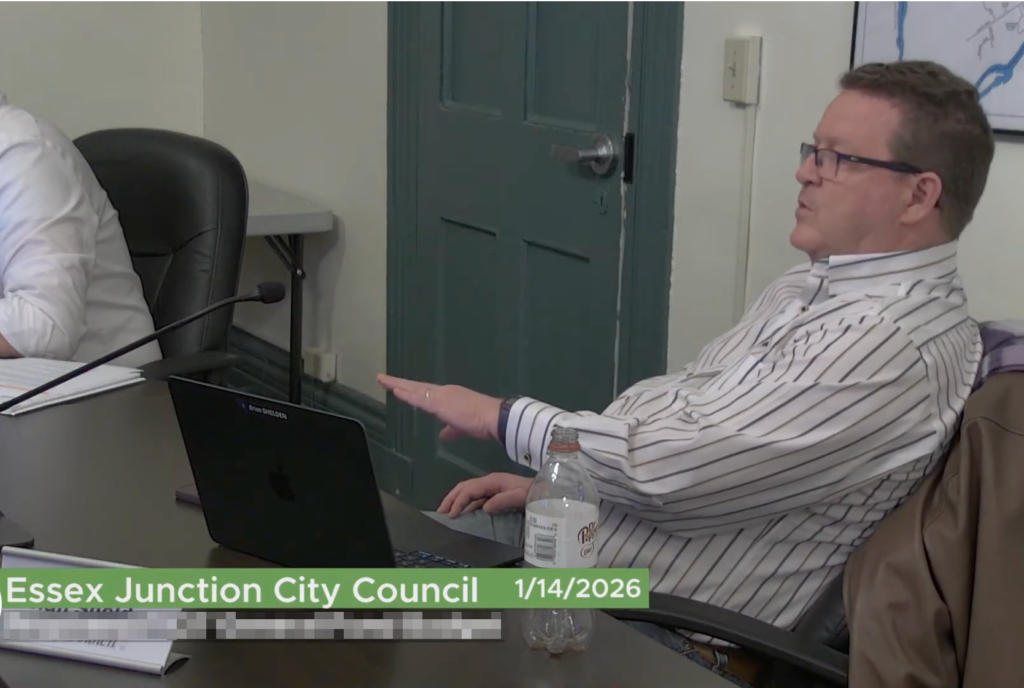
Recently the Essex Junction city council approved the “Connect the Junction” plan. One of its features was to allow for up to 10 stories, primarily in the Pearl Street corridor.
I wanted to talk a bit about why I felt this was necessary, and why I voted for it.
We urgently need more housing
The starting point is simple: we are in a housing shortage, and it is hurting real people right now.
Rents are high (averaging > $2,000), vacancy rates are extremely low (under 2% in some sources), and many residents are struggling to find a place to live in or near Essex Junction. The struggle is the same for young people, seniors looking to downsize, or folks who have been offered good jobs in greater Essex.
When supply is this tight, prices rise. That’s not ideology; it’s math.
Doing nothing, or doing too little, is not a neutral choice. It actively maintains a system where housing remains scarce and expensive.
We have to grow upward
Essex Junction is literally built out. There are 3 big empty spaces left: Global Foundaries, the Champlain Valley Exposition, and the Whitcomb Farm on South Sreet. And the Whitcomb farm has a conservation easement, so you can’t build there anyway!
We do not have large swaths of undeveloped land left for single-family homes, and we’re not going to magically create more space.
That leaves us with two options:
1) Accept that housing will remain scarce and expensive, or
2) Allow more homes to be built where infrastructure already exists by building up
Taller buildings near services, transit, and jobs are one of the few realistic tools we have left to add meaningful housing capacity here.
“They’re all rentals”
That’s true…for now. And that’s part of the problem.
A common concern I hear is that new multi-story buildings are “all rentals.” Making it harder for young people to own their home. That observation is largely accurate today. And it’s important to understand why.
Right now, our rental vacancy rate is hovering around 2%. That is extremely low. In a market that tight, nearly anything that gets built will be rental housing, because rentals are immediately absorbed and financially viable.
Blocking or limiting new construction doesn’t fix that. In fact, it actively makes it worse. When vacancy rates stay this low, rents stay high, competition is fierce, and it gives all the leverage to landlords.
Adding more housing – yes, even rental housing – is how we move toward healthier vacancy rates and relieve pressure on the entire market, including older apartments and starter homes.
Condos are more likely in taller buildings anyway
There’s also an important nuance that often gets lost: condominiums are far more likely to appear in buildings above a certain height.
Once you reach a certain scale, the economics and ownership structures start to change. Larger buildings are more likely to support condo models, mixed ownership, and long-term residents rather than exclusively short-term rental turnover.
Allowing taller buildings doesn’t lock us into rentals forever. It actually opens the door to more ownership opportunities over time.
I know this from personal experience. I once owned a condo in Chicago in a building that was constructed in 1968 as rentals and converted to condos in the 1970s. That kind of transition is common. And far more likely in larger buildings.
Looking ahead
This vote was not about changing the character of Essex Junction overnight. It was about acknowledging reality and planning responsibly for the future.
We can’t solve a housing shortage with wishful thinking, or by pretending we still have unlimited land to build on. Nor can we bury our heads in the sand and expect nearby towns to solve the problem for us. Vermonters help their neighbors.
And even if we tried to push the problem outward, most of those towns would just send their traffic through Five Corners anyway. 🙂
If we want a community where people who work here can live here, with walkable neighborhoods, strong schools, and kids who don’t feel they have to move away to build a life, we need to allow smart, well-located growth.
That’s exactly what the Connect the Junction plan does. That’s why I voted for it.
Conclusion
The reflections above are mine, and do not necessarily represent the views of the City nor the Council.
As always, government moves slowly. There’s still a step or two before it becomes part of the Essex Junction Land Development Code, and even longer before developers to reach for the sky.
So as always, I welcome thoughtful conversation and feedback.
—
Brian Shelden
City Councilor, Essex Junction
bshelden@essexjunction.org
(802) 879-7665