
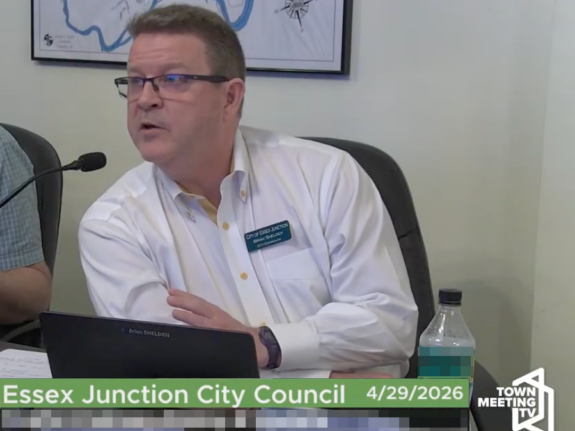
April was a busy month in Essex Junction, with elections, long-term planning discussions, and some genuinely difficult policy debates. As always, here’s my quick summary, from my perspective, of what the City Council worked on during April.
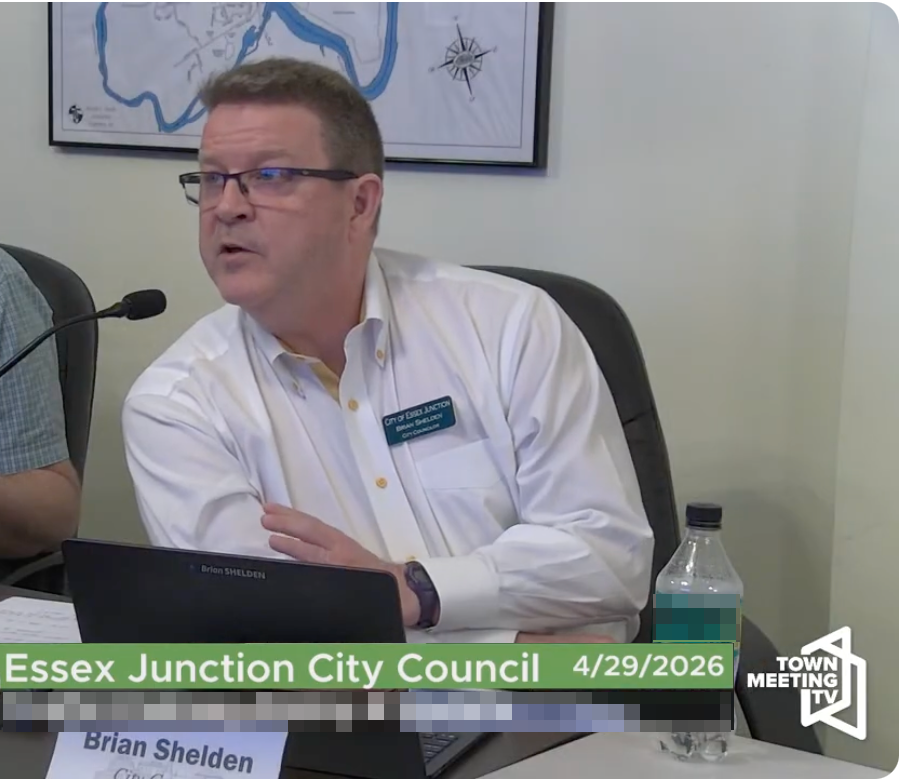
Election Results
First, congratulations to Bethany Clark and Raj Chawla on their election victories. I’m looking forward to working with both of them on Council.
I also want to thank Elaine Haney and Marcus Certa for their service to Essex Junction. Both have put in an enormous amount of time and effort on behalf of the city, often working on difficult and thankless issues. Essex Junction is better because of their work.
Park Street
Council spent significant time discussing the Park Street project, and ultimately voted 4–1 to move forward with this important safety initiative.
Park Street is currently one of the most dangerous pedestrian areas in the city. It is also a major gap in our cycling infrastructure between the multi-use path on the Williston side of the dam and the Crescent Connector.
The plan we selected is extremely low-cost for the city, relying primarily on re-striping and paint. It narrows the travel lanes for cars while adding bike lanes on both sides of the road. One consequence is the removal of some on-street parking near Park Street Tavern and Rocky’s, though both businesses have substantial off-street parking available.
I supported this project because of its low cost, increased safety, improved walkability, and speed reduction benefits.
Rebranding Effort
The city’s rebranding effort also continued this month.
Branding matters, especially for economic development and for building a modern identity for our still relatively new city. But it also needs to feel authentic to the people who actually live here. I think the committee overseeing the effort has done a good job balancing those goals.
Council has already approved a new logo. I’ve been impatiently pushing behind the scenes to start rolling it out on letterhead, streetlight banners, and, of course, at the city (not village) border.
This month, Council finalized the design direction for the entrance signs, and there’s now a clearer implementation plan moving forward.
Traffic Calming
One of the issues I hear about most often from constituents is speeding through residential neighborhoods.
Staff has been working hard to replace, and them implement, or new traffic calming policy. This month he provided Council with an update on the traffic measurements and data collection completed so far.
I appreciate the amount of work staff has been putting into this issue because residents clearly care deeply about making neighborhood streets safer.
Financial Purchase Policy Discussion
Council also approved updates to the city’s financial controls and purchasing policies.
In practice, this mostly involved simplifying the approval structure and adjusting spending thresholds upward slightly to account for inflation. Previously, we had six or seven different approval levels depending on the funding source and purchase amount, which became especially cumbersome when federal grants were involved.
While this may sound procedural, these policies matter because they determine how efficiently public money can be spent, what level of oversight exists for purchases, when Council involvement is appropriate, and how difficult it is for staff to actually get projects completed.
One thing I appreciate about this Council is that members are willing to dig into these governance details rather than simply rubber-stamping them.
GMT Cancels the #4 Bus
One disappointing development this month was GMT’s decision to cancel the #4 bus route.
Public transit is already limited in many parts of Chittenden County, and losing service creates real challenges for riders who depend on it for work, school, appointments, and daily life.
GMT’s position was that the #4 was the least-used route in their system, and therefore the most likely candidate for cuts. The City, Town, and EWSD are now exploring whether there are ways we can help preserve some level of service.
EJRP Software Contract
Council also had a useful discussion regarding the EJRP software contract.
I appreciated that this item was pulled from the consent agenda so it could receive a public discussion instead of being approved automatically without debate. Software contracts can become surprisingly expensive and complicated over time, especially when they involve subscriptions, integrations, and operational dependencies.
After discussion, it became clear that EJRP had already done the appropriate due diligence and concluded that their existing vendor was no longer meeting their needs. One of the motivations for switching vendors was the lack of strong financial reporting tools in the old system, though some wording in the packet may have unintentionally implied more serious financial discrepancies than actually existed.
I want to thank our new EJRP Director, Mark Brislin, for coming in and answering questions directly.
These are exactly the kinds of issues where Council should be asking questions publicly and making sure residents understand both the benefits and the costs involved. I support EJRP’s decision to switch vendors and the implementation plan they presented.
DEI Policy Amendment and the Amtrak Grant
One of the more difficult conversations this month involved amendments to the city’s DEI-related policy language in order to preserve eligibility for federal funding connected to the Amtrak station project.
I think everyone recognized the awkward position local governments are currently in: trying to maintain community values while also navigating changing federal requirements tied to major infrastructure funding.
The Amtrak project is enormously important for Essex Junction and the broader region, and I strongly support the planned station upgrades.
That said, I believe the Executive Order restricting DEI requirements in federal contracts will ultimately be found unlawful. Multiple court cases challenging these policies are currently underway around the country.
I believe all of us, including local governments, should stand up when federal actions are unlawful. I voted 'no' to avoid “obeying in advance.”
Councilman Certa and I voted against changing the city’s DEI policies, and the policy was ultimately changed 3 – 2. If the courts ultimately strike down these restrictions, I will work to restore the prior policy language.
Looking Ahead
As always, much of Council’s work happens in the details: infrastructure planning, contracts, policies, budgets, and governance decisions that rarely generate headlines but have significant long-term impacts.
If you have thoughts on any of these topics, or anything else happening in the city, please reach out. Hearing directly from residents is one of the best parts of serving on Council.
Thank you for staying informed and engaged. It genuinely makes our city stronger.
As always, this post reflects my personal opinions and not necessarily the opinions of the City or the City Council.
--
Brian Shelden
City Councilor
bshelden@essexjunction.org
(802) 879-7665